Sheen is about durability, not just shine
The practical trade-off is simple: the flatter the finish, the better it hides surface imperfections and the worse it takes cleaning. The glossier the finish, the tougher and more washable it is, and the more it shows every wave in the wall behind it. Most sheen mistakes are picking for looks and then living with the durability.
Ceilings
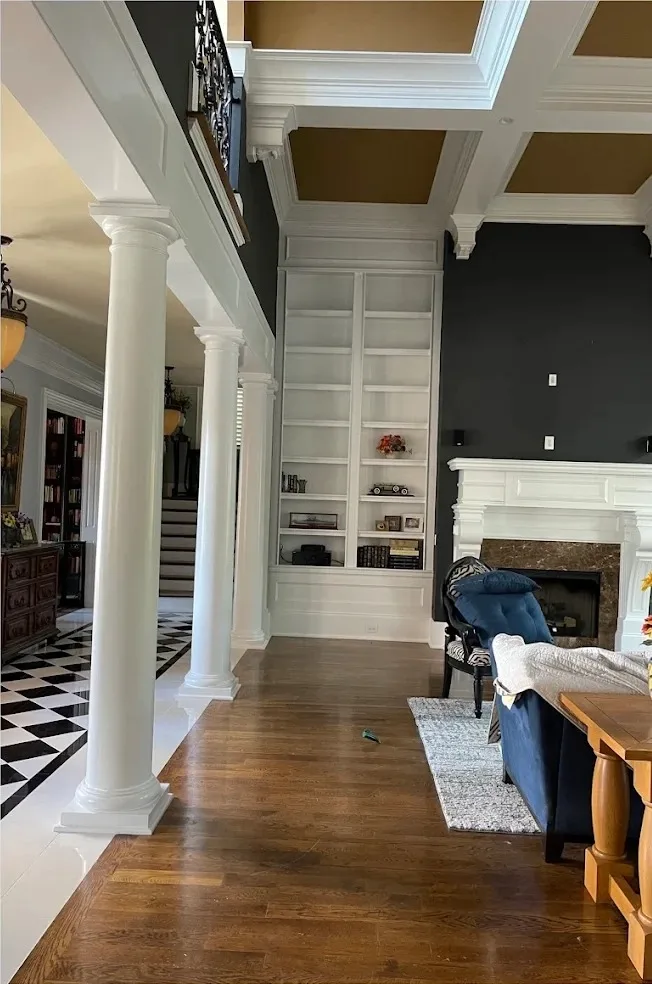
Flat, almost always. A ceiling has raking light across it and any sheen turns roller laps and drywall imperfections into a feature. Flat also hides the texture variation you get on an older or patched ceiling.
Walls
Eggshell is the general answer for living spaces: enough sheen to wipe, flat enough to be forgiving. Move up to satin in kitchens, bathrooms, mudrooms, and hallways where hands and moisture are constant, and in a house with kids or dogs. Flat walls look lovely and do not survive a wipe, which is why builder flat is the most common thing we are asked to replace.
Trim, doors, and cabinets
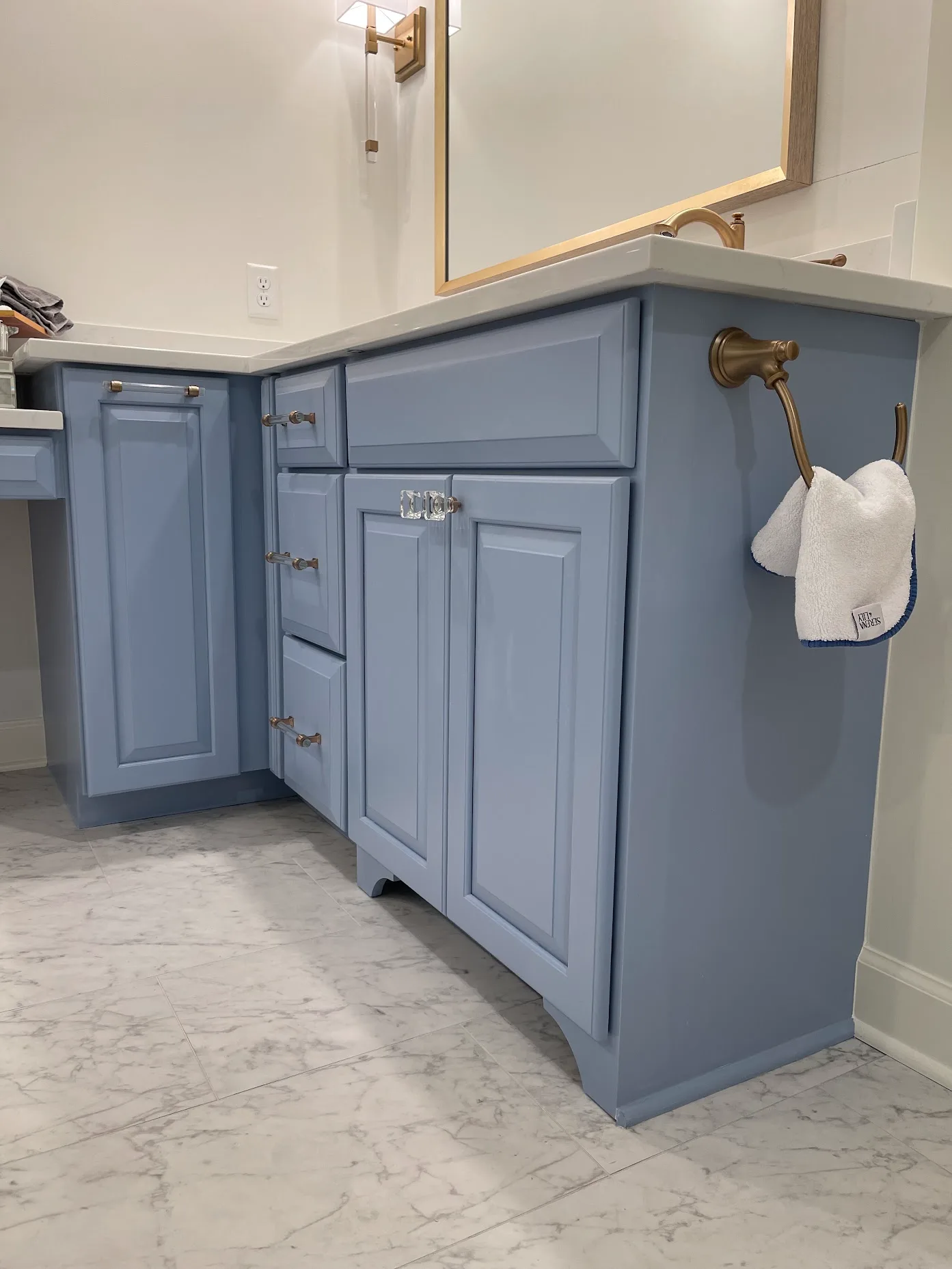
Semi-gloss on trim and doors, because they get touched, cleaned, and knocked. Cabinets want a hard finish too, and this is where product choice matters more than the sheen name on the can. On millwork with a fine profile, a slightly lower sheen keeps the shape readable instead of glaring.
A note on comparing colors
The same color reads differently at different sheens, because gloss changes how light comes off it. If you approved a color on a flat sample and are putting it on trim in semi-gloss, expect it to look a shade different. We will put samples up in the actual light before committing.